
I’ve always been fascinated by how silence works. Not the peaceful kind, but the kind that creeps in when it’s easier to look away than speak up. The uncomfortable kind.
For most of my life, I stayed silent. Not because I didn’t care, I cared deeply. But I didn’t know how to speak up, not for others, and often not even for myself. I saw people around me do it: standing up, speaking truth, advocating out loud, and I envied that kind of courage. Meanwhile, I kept quiet. While frequently beating myself up internally because I didn’t say something when I should have.
It wasn’t that I didn’t see the moments. I did. But it felt like one of those dreams where you see something terrifying, a ghost, a threat, something clearly wrong, and you try to scream, but not a damn thing comes out. You’re frozen. That was me. Paralyzed by discomfort.
I didn’t want to make waves, challenge the moment, or be that guy who ruins the vibe. I’ve always been coined the “nice guy,” and I’m good with that, but sometimes the nice guy has things to say too. What caught people off guard wasn’t the message, it was the messenger. When I spoke up, it didn’t matter whether my words were reasonable or fair. People weren’t used to hearing me deliver them, and somehow that made the same message feel sharper, louder, even threatening, just because it came from my lips.
I used to resent that. But I’ve come to realize those expectations for me to be calm, thoughtful, respectful, aren’t a weakness. They’re part of who I am. And maybe, just maybe, that’s the kind of voice we need more of right now.
Because let’s be honest, there’s an absurd amount of noise out there. And there is a lot of confusion. What’s right? What’s wrong? What even matters anymore? The moral compass feels like it’s deviating — or worse, glitching entirely.
Sounds all too familiar with our current political-economic environment, eh?
Funny thing is, I’ve also learned that silence can have power, but only when it’s intentional, not when it’s a substitute for courage. There’s a big difference between silence that holds space and silence that avoids responsibility. I’ve lived both. I’ll come back to that.
I’ve come to realize that caring and advocating can’t be separated. One without the other is just a nice sentiment with no spine. We throw around the phrase “it takes a village” when talking about raising kids, but let’s be honest, it applies to just about everything worth building. Whether it’s family, teams, businesses, or communities, we grow more when we stop making everything about ‘me’ and start standing up for ‘we’.
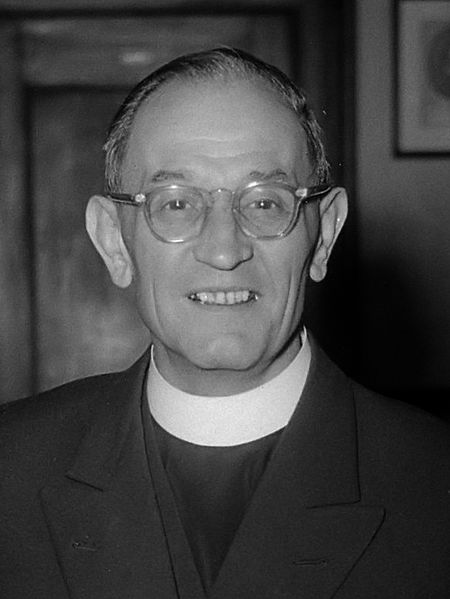
Few pieces or quote’s have stayed with me as of late like the one below; not for its volume or its history, but for the silence it breaks and the discomfort it demands. It’s simple. It’s freaking heavy. It’s true. And that’s exactly where this blog begins.
First they came for the Socialists
– Pastor Martin Niemöller
And I did not speak out
Because I was not a Socialist
Then they came for the trade unionists
And I did not speak out
Because I was not a trade unionist
Then they came for the Jews
And I did not speak out
Because I was not a Jew
Then they came for me
And there was no one left
To speak out for me
This isn’t a poem, it’s a post war reckoning. Martin Niemöller, the man behind these words, was a Lutheran pastor in Nazi Germany. Early on, he actually aligned with a lot of right-wing ideas. But when Hitler started tightening his grip on the church, Niemöller pushed back and because of it ended up spending eight years in Nazi prisons and concentration camps. These words came later, as a reflection on what happens when good people stay silent. It wasn’t just about politics, it was about moral responsibility. About how silence doesn’t protect you forever. Eventually, the silence comes for you too.
It’s easy to look back and see all the moments I should’ve spoken up for others, for myself, for what mattered. I can count dozens: moments as a kid when I should’ve said something to others who weren’t treating people close to me the right way, moments with friends who chipped away at me without realizing it, because I never told them they were crossing a line. Hell, I spent most of my eighth-grade year saying nothing just to fit in after moving to a new place, because staying quiet makes it easier to be accepted. And that’s the trap: silence often masquerades as belonging.
Belonging without a voice isn’t real, it’s just proximity. And I carried that habit for years. Not because I didn’t care, but because I didn’t trust that my care was worth expressing. I didn’t have the backbone yet — the spine to speak. And when you don’t speak, you learn to let your thoughts live quietly in your head while others say out loud what you were thinking all along. That’s not leadership. That’s self-preservation.
My shift didn’t happen overnight. It happened slowly, through people who believed in me before I fully believed in myself. My wife, without even trying, gave me more confidence than anyone ever had. She brought out something in me that had always been there but stayed buried under years of hesitation. I still don’t know how I landed her, but I do know she’s been my rock. Her belief in me taught me to trust my gut more often. That gut, it turns out, is usually right. This is the kind of space where a line like “If there’s any doubt, then there is no doubt — the gut don’t never lie” isn’t just a lyric from Sturgill Simpson (aka Johnny Blue Skies) … it’s a leadership principle.
I don’t remember the first time I truly found my voice, but I’ll never forget one of the most defining moments I used it. In 2022, I testified before the Georgia House of Representatives to advocate for veterans struggling with severe mental trauma (treatment resistance depression, PTSD, etc.), specifically pushing to obtain funding for Emory University to study non-traditional therapies like the use of psilocybin. Not exactly a mainstream topic. But there I was, sitting in front of seasoned politicians both in person and via live stream, including a long-time Southern Republican and curious but uncertain veteran himself, making the case that our veterans deserved better options to heal. After all the testimonies, one of them looked me in the eye and said, “I see it now. This is something our veterans should have access to — and so should others in the general public.” That moment wasn’t just about policy. It was about voice. It was about intention. It was about the responsibility we have to care out loud.
Advocacy doesn’t always need a microphone. Sometimes it’s bold and public, and sometimes it’s quiet, intentional, and deeply personal. But it’s always about purpose. You can’t say you’re advocating for others if you’re doing it to feed your ego. Advocacy without care is just noise. Care without action is just sentiment. But when you combine the two, care and advocacy, that’s where something real happens.
For me, that combination has come through discomfort. A few years back, a close friend and I committed to a full year of intentional discomfort — to challenge ourselves in real, tangible ways; honestly, I’m not sure it ever really stopped. That journey led me to yoga (which, yes, I originally mocked). But in the end, it literally helped me heal. Six weeks in to yoga, I was completely off my nerve pain meds and no longer going to doctors, who bear in mind, couldn’t figure out what was wrong with me after many months of poking, prodding, prescribing, and scanning (my body and my credit card). I had to get uncomfortable physically and mentally, and once I did it was a paradigm shift. That’s the thing about discomfort: it doesn’t just change your mindset — it transforms your body, your habits, and your leadership.
Growth doesn’t come from comfort. It comes from challenge, from conviction, and from the willingness to speak when it’s easier to stay quiet.
This quote has taught me a lot about what it means to have an identity, to live with intention, to express the outward layers of my character more deliberately, and to be conscious of how I show up every day. I’m far from perfect and my wife will be the first to tell you that. None of us are. But the older I get, the harder I try to be better, not just for me, but for the people around me and the kind of world I want to help shape. I have three kids who look up to me, and they need a guiding light that isn’t the glow of a screen. They also need to know that it’s okay not to follow the crowd because real freedom starts with thinking for yourself.

I’ve always tried to put myself in other people’s shoes, and when I do that with Pastor Martin Niemöller’s words, it’s unnerving. It makes me think twice about keeping my mouth shut when something feels off. It’s pushed me to speak up in situations where I once would’ve chosen silence. I don’t walk around thinking about this quote every day, but that’s the beauty of certain words and phrases: the ones that stick don’t need to be memorized. They get etched into your perspective and quietly shape how you move through the world.
Are you living in alignment with what you believe or just what’s convenient?
What story are you telling through the silence you keep?
My view of leadership has changed drastically over the years. Twenty years ago, I wouldn’t have wanted anything to do with leading a team, let alone a large group of people. But now? I love it and I thrive in it. Personal and professional growth have become synonymous for me — and honestly, that’s how it should be. I spent too many years fighting that overlap, and I’m still not sure why. Growth is growth. Life doesn’t care if it’s happening inside or outside the office.
How I lead has also changed. I lean into hard conversations instead of avoiding them. I face challenges head-on instead of pushing them off until they become unmanageable. And I’ve learned that as a leader, people are always watching, not just what you say, but how you show up. Wouldn’t you want the people you work with to embody a more caring, advocating nature? Same goes for your personal life. That old adage about surrounding yourself with the people you want to be like? That’s not just something we tell our kids; it applies to the adults we choose to occupy our time with, too.
I’ll be honest, I don’t love confrontational conversations, and if I did, I’d probably be a little concerned as that’s not who I am. But I’m equipped to handle them now. And I’m still learning every time I have one. Starting a new business has pushed more of those difficult conversations to the surface. It’s forced me to break through some long-standing comfort barriers, especially in areas I’ve historically struggled to speak about. Truthfully, a lot of those hesitations were just a form of quiet hubris — fear disguised as pride.
What’s helped is surrounding myself with people who carry high levels of confidence and conviction. It’s one thing to want to grow. It’s another thing entirely to be around people who live it and remind you what it looks like, every day.
At the company we’ve started, Treehouse Healthcare Staffing, these values aren’t just a poster on the wall, they’re baked into our DNA. We may be small, but our intentions are big: to challenge the way companies operate, not just in the Locum Tenens space, but in small business and corporate culture at large. We want to advocate for our clients and providers in a way that most staffing companies don’t even attempt, with honesty, transparency, and a deeper sense of human responsibility.
The internal culture we’re building mirrors what we expect externally. The values we want our team to embody with clients and providers are the same ones we live every day inside our own four walls. And yeah, I get that everyone says that. But I mean it when I say: we live it. I’ve led teams that prove this works.

I remember one of those pressure-cooker performance reviews with senior leadership, the kind where you know your results are going under a microscope. One stat I was proud to highlight: while the company was dealing with 20–30% attrition, my team of over 70 people had almost none. When they asked how I did it, I gave what I thought was an obvious answer: “I care about my people.” They kind of chuckled, looked at each other, and one said, “Well, I care about my people. Do you care about yours?” Heads nodded. The whole exchange was meant to brush off what I said, like caring couldn’t possibly be part of the equation, if not a huge chunk of it. To me, that moment said everything. Because yes, there’s more nuance behind great leadership than just “caring,” but if you don’t start there, what are you even building? That interaction stuck with me. It confirmed something I’d already been feeling about how too many people in too many companies are just rows on a spreadsheet, buried in an HR folder no one opens until they leave. That’s not leadership. That’s just headcount management.
Why can’t more of business, and life, work that way? Honest conversations, intentional exits due to proactive conversations, no backdoor firings or hallway whispers that feel like you’re living in an episode of ‘The Office’. Not every ending has to be a scandal or an HR-managed meltdown. Sometimes it’s just two people being real, calling it what it is, and moving on with mutual respect. That shouldn’t be rare, but it is. That’s what we’re trying to build at Treehouse. A culture that advocates and cares out loud. A business that doesn’t just say it’s different but proves it, day by day, person by person, conversation by conversation. There’s a reason our slogan is Guided by Purpose, Rooted in Care, because it’s not just what we say, it’s how we show up.
I’ve already posed some challenging questions and I truly hope you take a minute to sit with them. I’d love to hear your perspective, too. Drop me a line in the comments or hit the “Contact” section on the front page of the site.
What I’ve shared today has application in every part of life. It doesn’t matter if you’re a stay-at-home mom or the CEO of a Fortune 500 company; if you’re not finding ways to both care and advocate, what exactly are you doing? Are you spending more time focused on ‘me’ instead of ‘we’? And if so… where’s that really getting you? How does that mindset serve the bigger picture for your team, your family, your community, or the generations that follow?
A final reflection back to the quote that brought me here: First they came. Put yourself in Pastor Niemöller’s shoes. When you feel it in your gut, when something inside you says, “speak the hell up,” don’t ignore it. Don’t talk yourself out of caring out loud. Don’t live a silent movie in your own head. Take a moment to really ask yourself: Who’s counting on me to use my voice, even if they haven’t said it out loud? What happens to them if I keep waiting for someone else to speak first?
Get uncomfortable. It’s where your voice finds its teeth.



 Welcome to WillyJRoots
Leave a reply to Nate Cancel reply