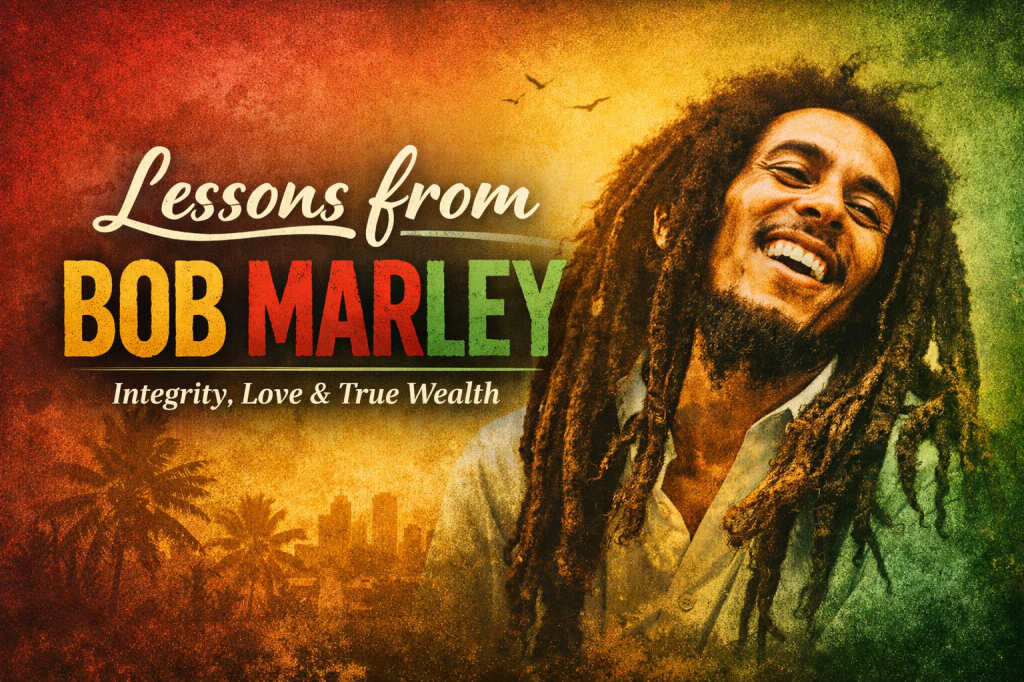
The greatness of a man is not in how much wealth he acquires but, in his integrity, and his ability to affect those around him positively.
-Bob Marley
Bob Marley is someone I’ve admired for years. It started out as a love for his music. The first time I heard the ‘Legends’ album, I was in 9th grade sitting outside by a pool on a warm summer night with friends. As soon as the vibrations came out of the speakers, I fell in love. As I learned more about Bob, I discovered the deep and thoughtful side of him and how and why he sang the music he did.
Bob Marley grew up in an area where oppression was front and center. Ranging from his mixed-race identity and a rigid class system to political oppression because of his music, and even spiritual persecution as Rastafarianism was criminalized. At the end of the day, Bob pushed the truth which reached the masses all while revolting against ‘the man’. Marley refused to be bought as money wasn’t a driver for him.
This might seem crazy to many of us as we live in a society where we don’t have to face the same oppressions as Bob. Or do we? Does any of this sound all too familiar right now?
Recently, I’ve struggled with this greatly as I watch the world around us unravel further. With 3 children getting ready to enter the real world in a matter of years, I have an internal sense of responsibility to pay closer attention to how the world is evolving, if I want to shepherd my kids appropriately.
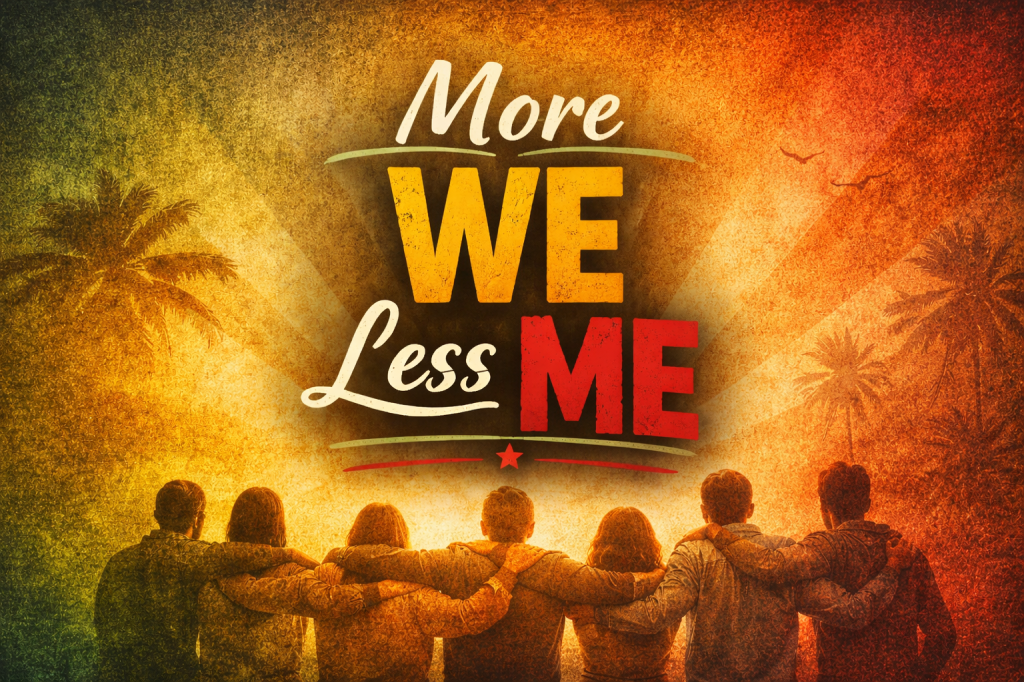
It seems like we’re moving further away from loving one another and allowing us to be the unique humans that we are, to a huddled mass of people who prefer collectivism over individual moral agency. At my old company as we were going through a tough transition, I made the comments, we need more “We” and less “Me.” It feels like so many people are rushing to make sure “they get there’s” or obtain the possessions and/or personal gain they strive for. Egos are ratcheting up, moral compasses are spinning out of control wildly, and more people are less willing to think for themselves.
This system, in my eyes, is broken. It’s fragmenting our society, rewarding further isolation, and pushing greed and ego. I 100% realize we need to change and evolve – we’ve been doing it for thousands of years and won’t stop now; however, using some moral math in the process would likely help ensure we stay on the right course as a society.
Bob leaned toward what I’d call collectivism of responsibility, which is vastly different from political collectivism. He felt that change started with the individual which would transcend to collective well-being. Greatness to him is a contribution, not something that you accumulate such as a title, net worth, followers, etc. This is something I’ve tried to infuse into my everyday being, especially as a leader at home and in the workplace.
Here are some other areas I find extremely important that Bob was also aligned on:
- Integrity is
- Words matching actions
- Public self matches private self
- Your success doesn’t erase your humanity
Fame didn’t push Bob to be exempt from what his character should be, it tested it.
The last part of the quote is all about how we can impact other people’s lives positively. It’s important to call out that he didn’t say to ‘control’, ‘convince’, or even ‘dominate’. He suggested affecting those around him positively.
- Marley felt influence was about how close you come to others
- How do you treat people?
- How do you show up when it’s inconvenient?
- How does your presence change a room?
What do you think True Wealth is? Marley wasn’t necessarily against money; he was against being measured by it and allowing it to define success.
- Bob felt true wealth, in his worldview was
- Having a clear conscience
- Strong relationships
- Leaving people better than you found them
We can all read how Bob felt about things and even sing his songs and proclaim the same ideas he had; however, putting this into practice is what makes the difference. Don’t just talk about it, be about it. Here are a few questions you can ask yourself each day:
- Did I act with integrity today, even when it cost me something?
- Did my presence make someone’s day lighter or heavier?
- If nothing I did today earned money, would it still matter?
If we all asked ourselves these questions every day, I have no doubt the world would be a better place. We’d likely have a heck of a lot less noise from the ‘system’. If you didn’t answer the question the way you wanted, that’s okay, that’s your signal to work on it. Don’t guilt yourself into anything, reflect on it. I know that if we measured greatness in a way like how Bob looked at it, we’d have leaders who would look different, success would feel much less hollow, and communities would heal faster. All of which sounds better than what we’re dealing with at the moment. A little love and compassion goes a long way.
 Welcome to WillyJRoots
Leave a comment